Over the Farm Gate, kindly provided by John Jefferies, Farmer Director
Farming is only ever completed properly in hindsight. After each harvest, time needs to be found to look back on the year and make a final judgment on what went well and what did not.
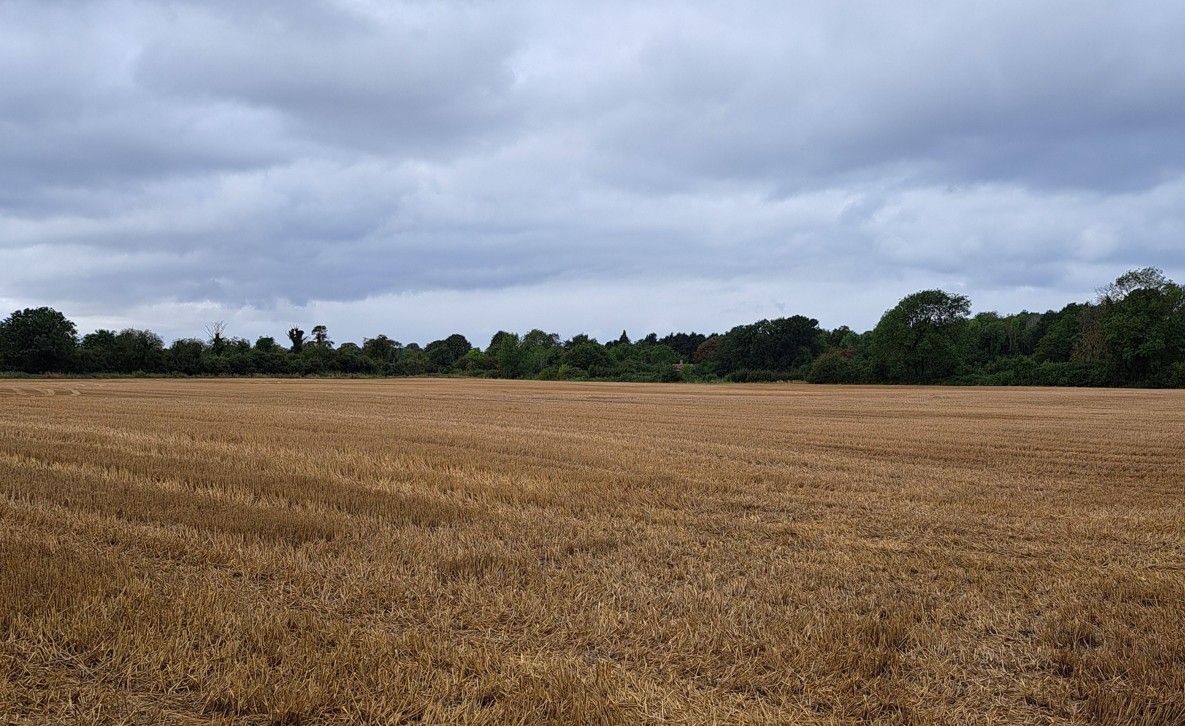
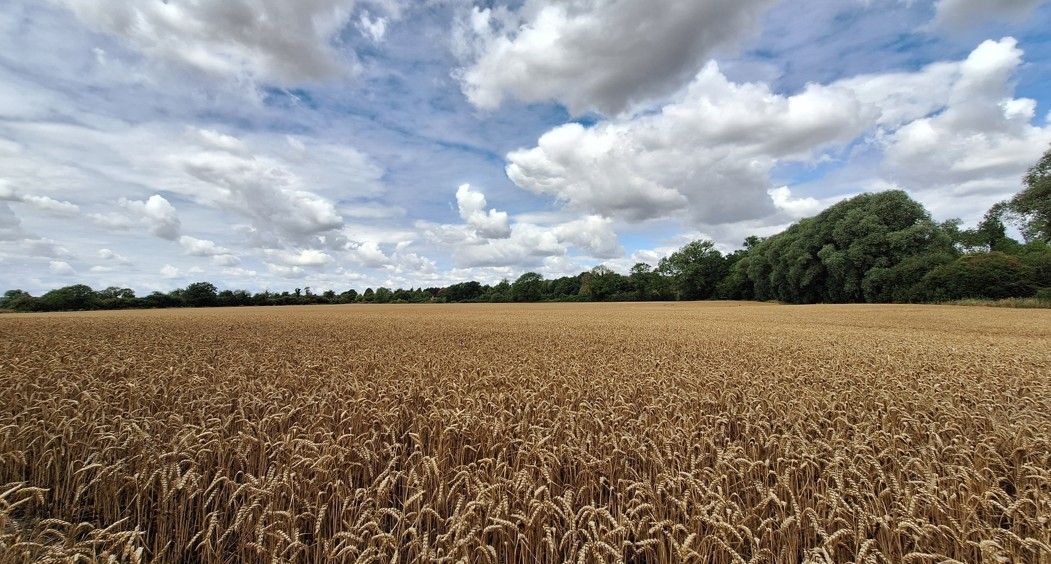
The breakdown of this year is quite something. I delayed drilling a little as September was hot and dry, I wished to drill in cooler conditions in October, so my crops were not too advanced the following spring and vulnerable to late frost. Also, I wanted the best efficacy from the autumn herbicides that we use to try and control black grass. This was successful and my wheats came out of the winter in fine condition with little or no black grass. Then the drought set in, this limited the moisture available for activating the nutrition applied to the crops. The late frosts duly came with the easterly winds, then the searing heat of May. Increasingly the wheat looked worse and potential yield started dropping. Fortunately, 55mm of rain came in the first 10 days of June. The crops took on a markedly green look and seemed fit and healthy. At that point I felt content that we could have a reasonable harvest. But then the scorching heat of late June came along; day after day over 35°C. None of us enjoyed being outside in that heat and neither did the wheat. Whilst we had the option of bolting inside, possibly to an air-conditioned room, the wheat just had to stand out there and tough it out, which it failed to do, taking the option of an early death under the sun. In no time harvest was upon us and the crop was disappointing. The Camgrain region has taken the worst of the heat and the worst of the drought during 2026. My crops produced the same as my neighbours yet have been managed so differently. My neighbour applied the standard dose of nitrogen fertilizer. I decided to keep my fertilizer in the shed once the drought kicked in. I did twice apply 40lts/ha of foliar feed that gave just 8kgN per application on top of 100kg/N of solid fertilizer. This produced a yield of 7t/ha of 13% protein milling wheat. So I am content that I have not wasted any expensive fertilizer. A full crop for the season from just 116kgN/ha!!
My Oilseed Rape was a delight to grow. No Cabbage Stem Flea Beetle, no slugs and no pigeons. But no yield either, just 2.8t/ha. The winter Oats were good; extremely cheap to grow. Just one fungicide for mildew and the standard 6.5 t/ha. Planet spring barley was an utter disaster; it was drilled in good conditions and in good time during early March, but it was totally stuffed by the heat and drought in May and produced just 3.5t/ha at 2.15%N.
I abandoned two fields of Linseed and took the decision to re-drill with forage Maize in late May. The June rains meant that I got a full germination and the crop raced away in ideal conditions (for Maize) and this crop now looks magnificent and is due to be foraged shortly. Finally, I had 3 small fields; 2 had been drilled with Linseed that had come to nothing and one I had simply given up upon as I could not see how anything would grow. I decided to drill, on 5th/6th June, with a further attempt to grow Linseed. Again these have grown well following those June rains, but another shower would have been useful. However, they do look like they will produce a good crop. These Linseed fields are about 4 weeks away from harvest, so the season is not yet complete here at Fuller’s Hill Farm.
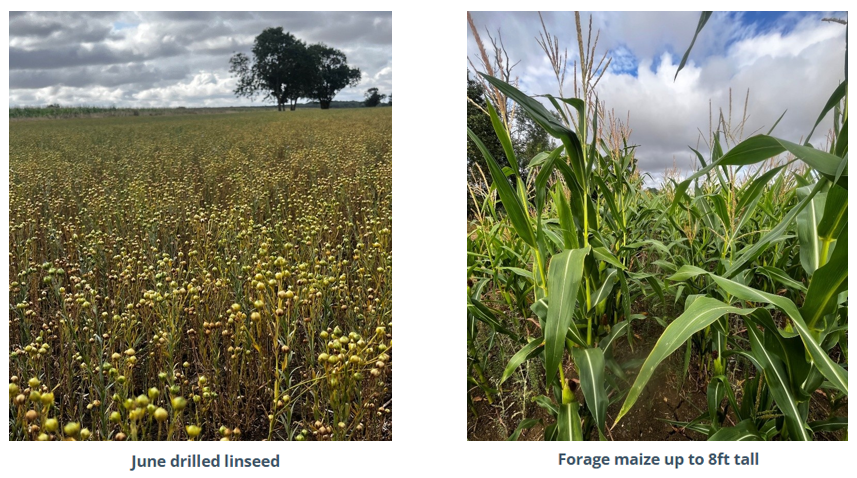
What a crazy year, when your best crops are those that germinated in June!!!